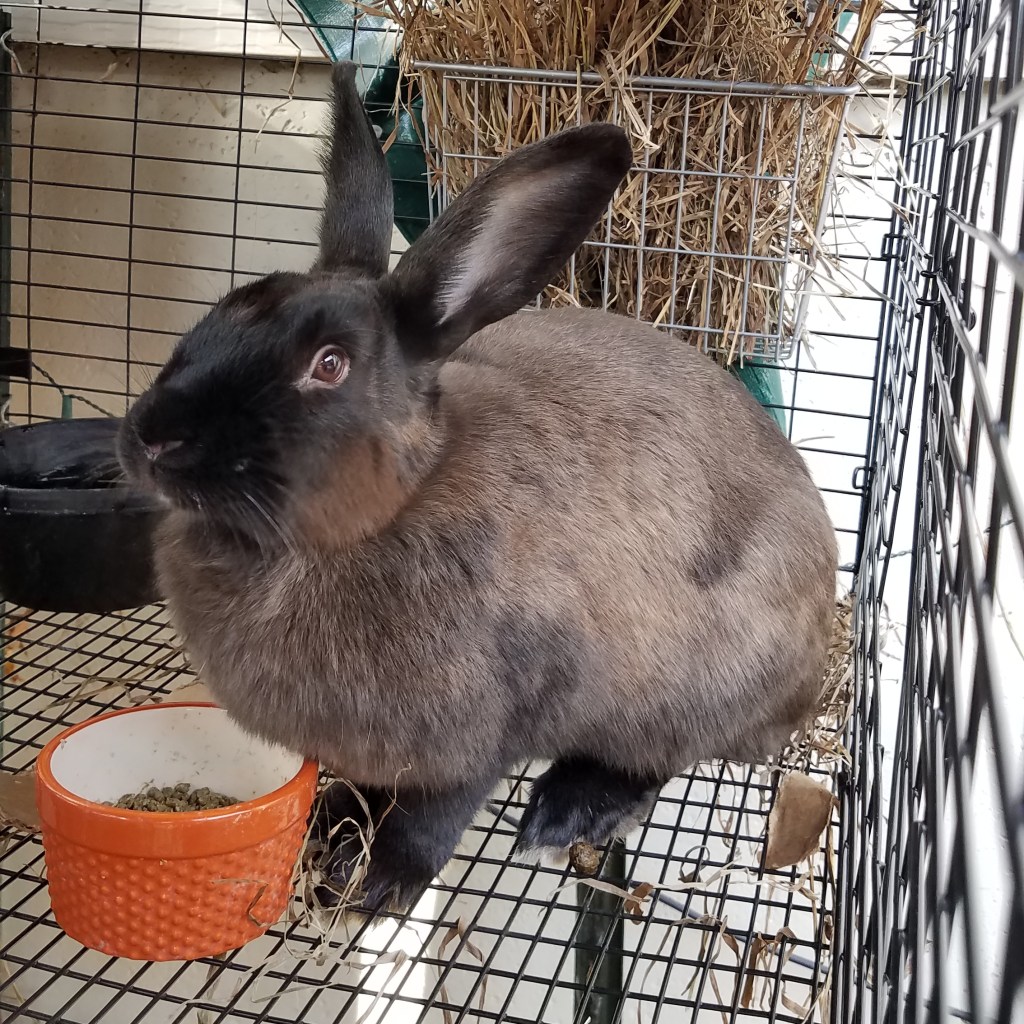
Like any domesticated animal, rabbits cost money to upkeep. Finding a rabbit may only be $20, a breeding pair $50, or a trio for $60. That’s if you aren’t looking for pedigreed or show quality animals. Then there’s everything else. Feed, hay, cages, waste collection/disposal, nesting boxes, supplements and medications, and more that adds up quick.
So what is the initial cost of getting into rabbits?
Let’s start with the space where your rabbits will be housed. Your average commercial meat breeder (New Zealand, Rex, Californian, etc) is going to be roughly 10-12 pounds. This means a breeding doe is going to need a cage that is at least 30x36x18inches [depth x width x height] to have room for a nesting box and your buck should have at least 30x30x18inches. If you start with a breeding trio (two does and one buck) you will need three cages to house them each independently. Additionally, you will need extra cages to move the growing kits into after they have weaned. There are many factors that will determine how much space or how many cages you will need for grow outs, but let’s just say you will need 2 cages for each litter (to separate boys and girls). Now you’re looking at seven total cages just to house an initial bare-necessity set up.
A colony set up is an alternative to cages, but comes with its’ own list of requirements that I simply don’t have the proper experience to speak on. So for this example we will stick to the cost of rabbits housed in cages/hutches.
Next, you have to figure out where those cages are going. Are they stackable cages that can be inside? Then they’ll also need trays for catching droppings. Are they being hung outside on posts or set into a wooden hutch frame? Then you will need a roof to shield rabbits from the sun, and rain. After that you will need to decide if poop is going directly to the ground, or if you will be setting up a catching system to collect the fertilizer. Also, if they’re outside, do you have a way to keep them safe from predators?
In addition to the structure, your hutches will need “furnished.” Does will need nesting boxes. Every rabbit will need a resting pad of some type as well. Wood blocks are good for cold weather and to have something to nibble on. Ceramic tiles are good for warmer weather. There are many options for resting pads. You will also likely want fans to help circulate air around your rabbits to keep flies and other bugs from landing on them. And have you even considered lighting yet?
Now your rabbits have a home, what are you feeding them? While you can raise rabbits either entirely on a complete pellet or entirely on forage and pasture, most of the breeders I have met use a combination of pellet, forage, and hay. One benefit of this is that your rabbit will be adjusted to each type of feed should one unexpectedly run out. Foraging is a great way to cut back on feed costs, especially if you have a small number or rabbits and the time to do it. Just make sure to do your research before you pick something that could be harmful.
Rabbits won’t eat unless they have water. How will you keep them hydrated? Gravity fed bottles or water lines are convenient for a large set up. Bowls are easy to clean. Bottles are good for inside as they don’t spill.
You have housing, feed, and water. Have you kept track of the cost so far? Neither have I, although reported averages are around $1,000. While raising rabbits can turn into a reasonable business (selling fertilizer, pelts, meat, or live animals), for the average hobbyist this investment is about having a sustainable meat source at hand. After initial startup costs, raising rabbits for meat can be way more cost effective than buying meat at the grocery store. Depending on your breeding schedule, you can recoup initial costs within the first few years of having your rabbits.
The upfront cost of starting to raise rabbits can be daunting. This is not meant to deter you in any way from wanting to do this. These are all of the decisions and costs that we had to go through when we got our rabbits. It’s a lot, but average meat prices for 2022 are: chicken-$3.70/lb, beef-$7.50/lb, and pork-$5/lb. The average cost of raising a rabbit (3oz of feed perday for 7 weeks after weaning) is $5-10 and gives you roughly 2.5lbs of meat. That’s $2-4/lb. That’s the same (often less) than chicken without all of the animal cruelty and just a little bit of your time, energy and care.
I would encourage more people to raise meat, garden, and let their suburban lawns be overrun with edible greenery. I also understand that this is not realistic for most. However, if you have the time and ability, there is a special level of satisfaction that comes from preparing a home cooked meal with ingredients that are 50-100% raised by you. That is definitely worth the investment.
 Paper and Rabbits