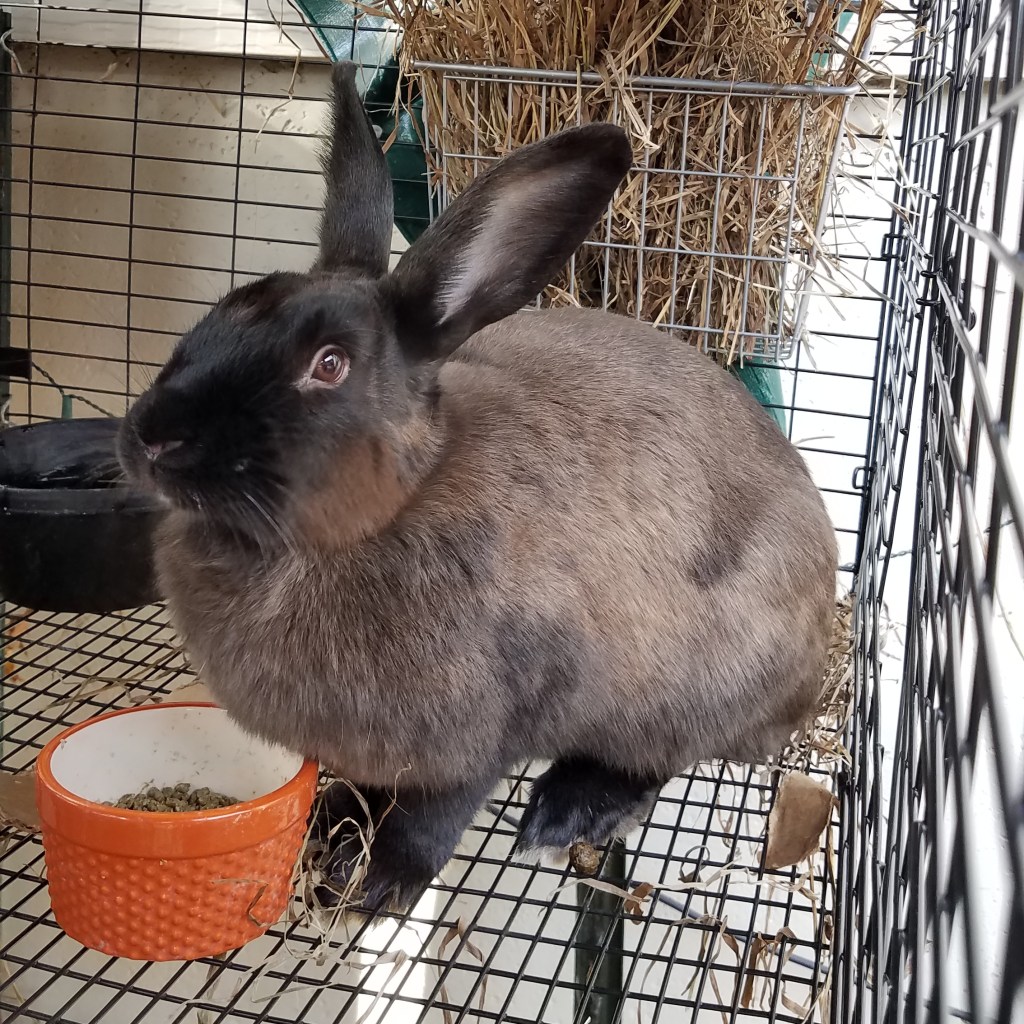
I often get asked if I sell my rabbits as pets. My answer is this:
“Not if I can help it.”
Don’t mistake this to mean that I don’t think that rabbits should be pets. I think rabbits make wonderful pets for many people. However, I do have my apprehensions about the community of pet rabbits.
Top of that list is inexperienced handling. Rabbits are not built like dogs and cats and do not behave like dogs and cats. While a rabbit may develop a fantastic personality, you need to remember that they are prey animals. They do not enjoy being picked up, hovered over, and pet most of the time. Yes my rabbits are friendly, and that is because they exist in their own spaces (cages) and have the choice to approach me on their terms. And yes, they do get pets, but very gently and only when they initiate it. Often it takes a while for a rabbit to settle into a new home, and during that time they are scared and confused. A child (or adult) stomping around trying to manhandle them is never going to work out well. At worst, you end up with a rabbit who either dies of a fright induced heart attack or accidentally ends up with a broken back or neck when picked up improperly. At best, they just don’t like you.
The next issue I have is dietary misinformation. There is an astounding amount of bad information out there on how to care for rabbits. Most “pet” food is actually pretty terrible for them and super high in sugar. Unlike dogs or cats, rabbits store fat internally and you cannot readily judge that they may be overweight. The high sugar in the treats and food may encourage them to associate their humans with the happy endorphins of a sugar rush, but it ultimately leads to health issues that often result in death. The second part of dietary issues is that rabbits have extremely sensitive guts. They need at least two weeks to transition foods and introductions to new food items are equally as slow because their gut bacteria has to adjust. They can’t expel gas like dogs or humans and end up bloated, which often leads to death (via their insides rupturing). Young rabbits are especially sensitive and prone to bloat, which is why they shouldn’t be sold immediately after weaning to ensure they are fully adjusted to their feed. Unfortunately, many breeders sell them young because they are so much more cute when they’re a 5-6 week old little floof-ball instead of when they are a 12 week old awkward teen.
That leads us to the novelty effect. Rabbits seem like a really cool pet to have, and just like puppies and kittens they often get gifted as christmas and birthday presents. Just like all new toys, the novelty eventually wears off, and it is very easy to ignore a rabbit who is scared and wants nothing to do with you. And while their nibbling may seem cute at first, it wears thin on the best of patience when they chew through expensive chargers, put holes in your clothes and blankets, and tear up carpet and hardwood alike.
Then we have the issue of money and how expensive care can cost. Many veterinary clinics do not take rabbits, and the ones that do charge them as ‘exotic’ pets. This means that a lot of pet owners can’t readily afford to give them regular check ups or vaccines. Even a minor illness or injury to a rabbit can end up costing a pet owner way more than most can afford or are willing to pay. And let’s be honest, many of the “pets” that are being sold are really just poor quality animals that should have been culled.
This brings me to my last point, bad breeders. Some breeders will sell animals with serious genetic defects just for people to feel the entitled thrill of “helping a disabled animal.” A responsible breeder shouldn’t be selling those animals, pet or otherwise. Malocclusions (overgrown teeth) are genetically passed on and when an animal produces them it should not be bred again. Head tilts, while they do have numerous causes, if not caused by minor ear infections (which will clear up) are generally a sign of serious nervous system issues and underlying illness. Sore hocks is another one that is often a genetic predisposition if the animal is not obese. Then again, a breeder who sells young will not have the animals long enough to even evaluate if these problems are showing up in their herd.
This isn’t a statement of pet vs. meat breeding, because bad breeding practice shows up in both circles. Still it is something to be wary of, and most people looking for a pet rabbit often aren’t aware of some of the things they should be looking for in order to assess the quality or overall health of the animal. This kind of general ignorance is why I try to discourage people asking me to sell them a pet. The absolute last thing I want to see is one of my babies neglected in an animal shelter. I’d rather them have a short fulfilling life as meat than end up living to have sad, lonely, or painful days.
 Paper and Rabbits
Leave a comment